


Does AI use schema markup?
What Google, Bing, OpenAI and Perplexity each say about schema in AI answers, the checks to run first, and how to test your JSON-LD.
Start with the task in front of you: add markup to a page, choose the right type, set it up on your platform, or fix a warning from a testing tool. Every guide has example code to adapt and a link to the tool that builds it.
What Google, Bing, OpenAI and Perplexity each say about schema in AI answers, the checks to run first, and how to test your JSON-LD.
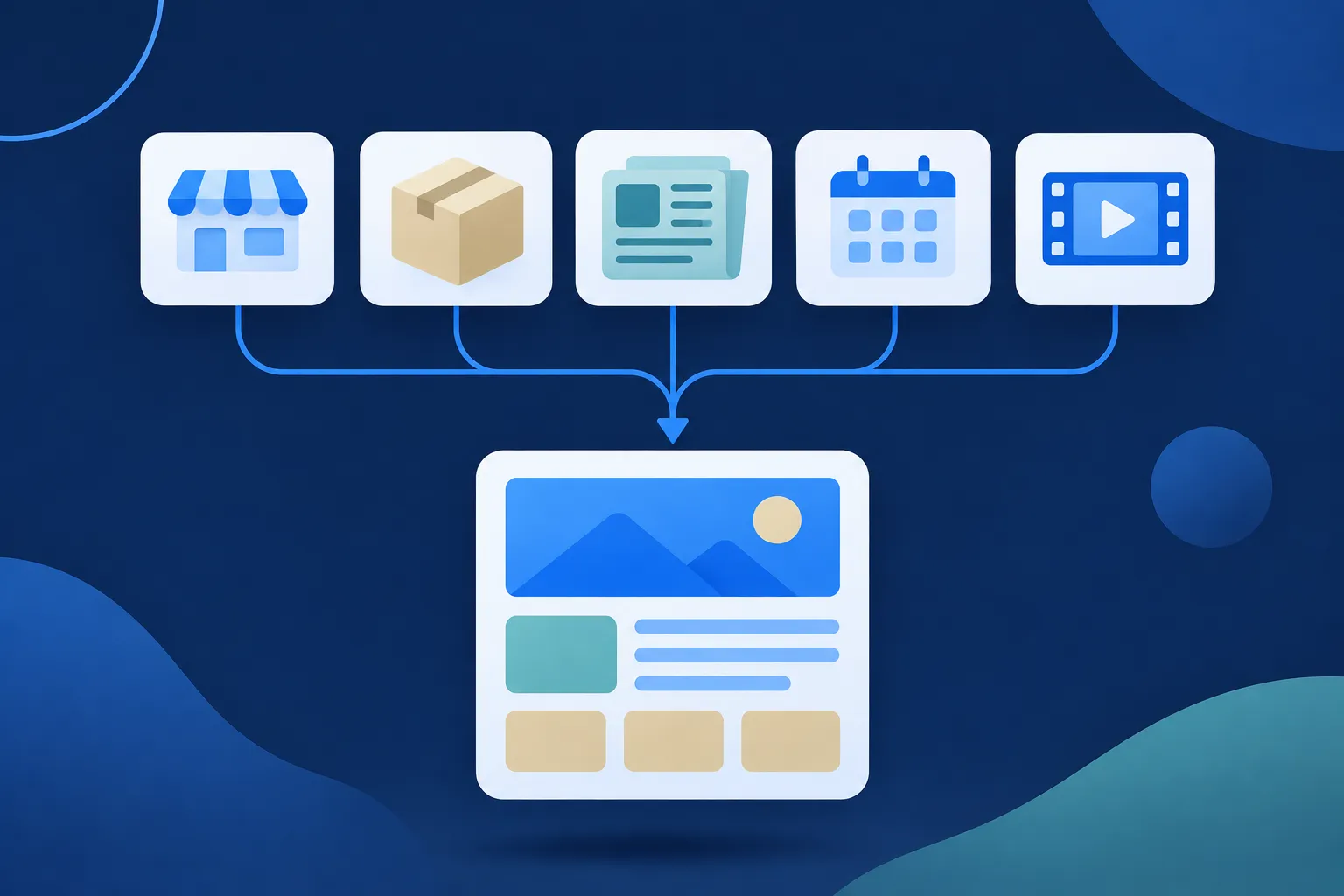
Complete JSON-LD examples for businesses, products, articles, events, videos and recipes, with what to replace before you publish.
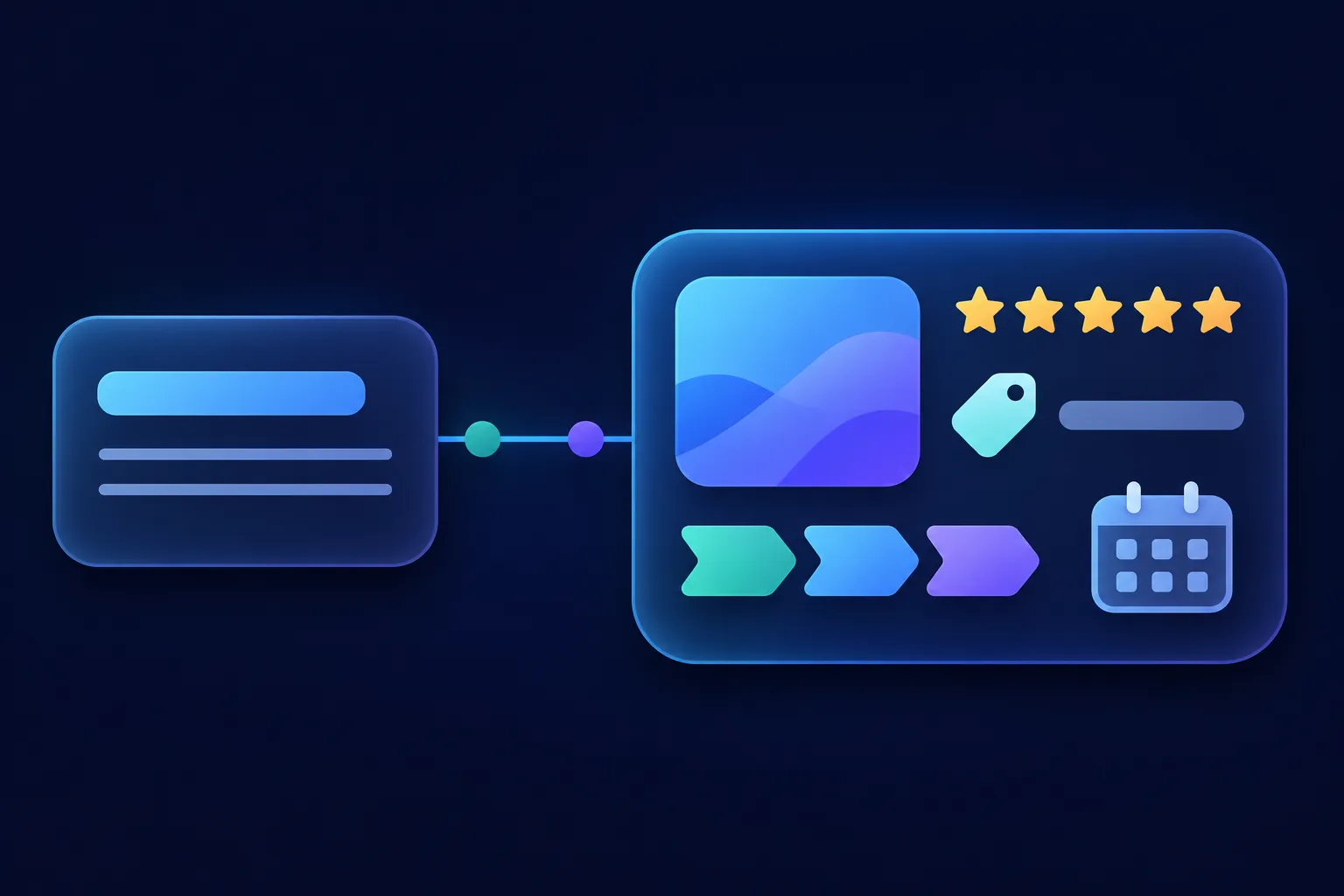
See which Google rich results still show, which have been retired, and what your page needs to qualify and be tested.

Pick a starting schema type for a local business, store, blog, service company or SaaS site, and see which fields each type needs.

Choose one format per entity, keep accurate markup that already works, and migrate inherited Microdata or RDFa in stages.
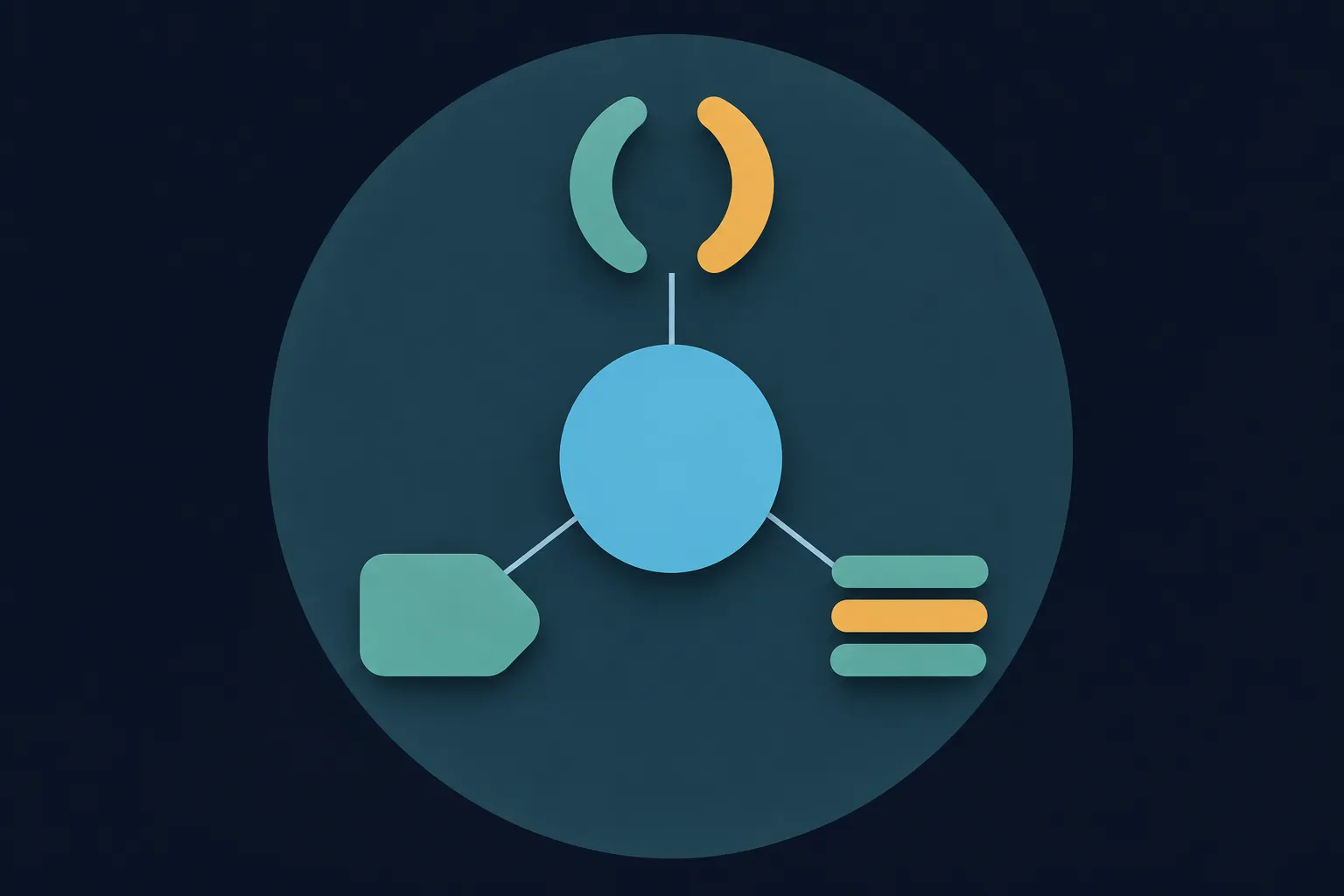
Structured data is the broad category; schema markup is structured data written with schema.org. Learn the layers, then check your own page.

The steps for adding JSON-LD on WordPress, Shopify, Wix, Squarespace, Webflow and hand-built sites, from choosing a type to testing the live page.

What schema markup can and cannot do for search visibility, which Google features remain, and how to measure the result on your own site.

Learn what schema markup is, read a complete JSON-LD example for a bakery, and see where the code goes and how to test it.
When Google, Bing or schema.org change a requirement or add a property, the blog explains what changed and what to update on your pages, with links to the guides it affects.