

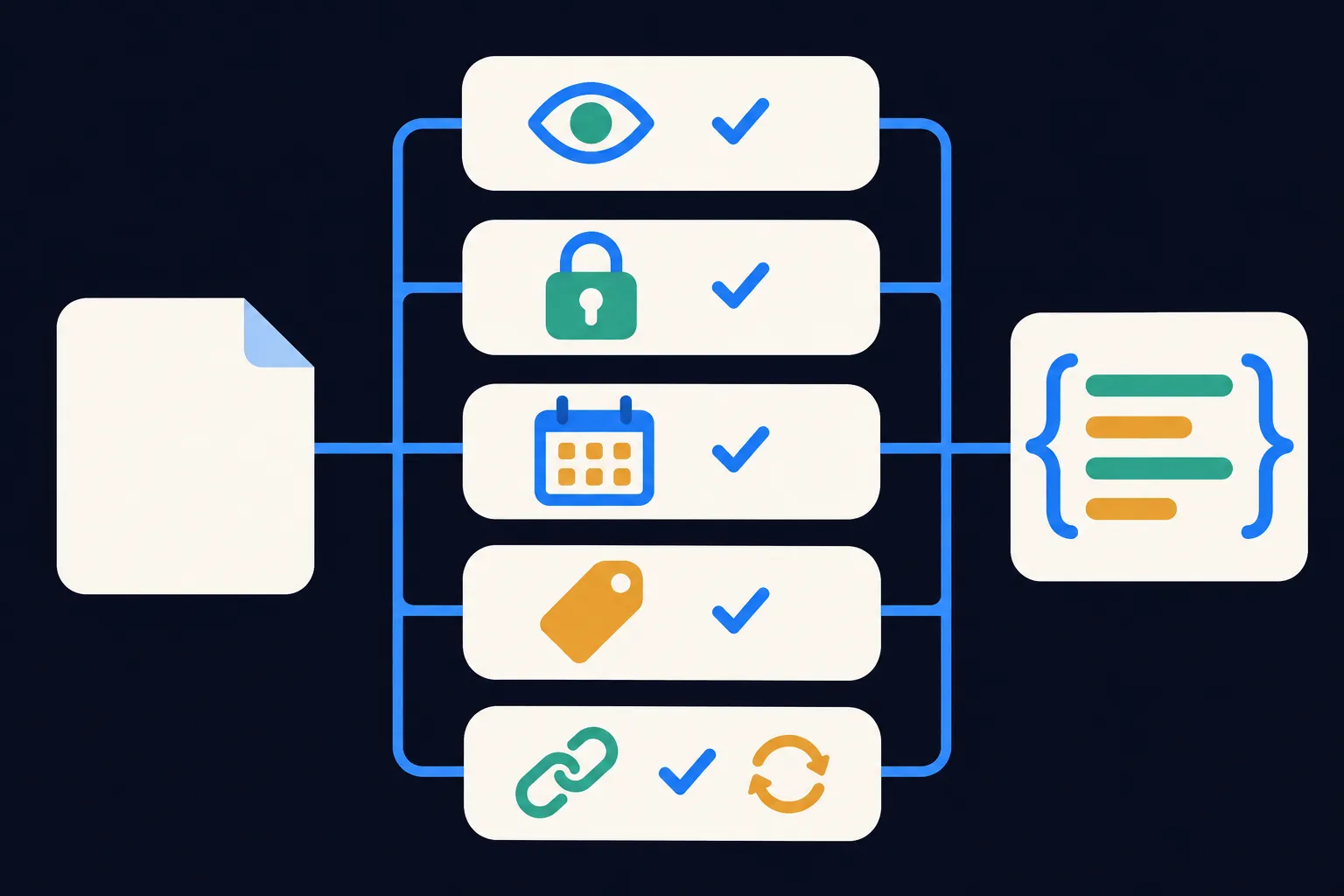
Schema markup best practices checklist
One checklist for auditing JSON-LD: accuracy, Google feature requirements, testing, other search providers and upkeep after changes.
Start with the task in front of you: add markup to a page, choose the right type, set it up on your platform, or fix a warning from a testing tool. Every guide has example code to adapt and a link to the tool that builds it.
One checklist for auditing JSON-LD: accuracy, Google feature requirements, testing, other search providers and upkeep after changes.

Find every schema block in the live HTML, choose one owner for each entity, remove the overlap at its source and retest.

Match a Search Console warning to its type and property, add only what the page shows, then test and validate the fix.

Work through the checks in order when valid markup produces no rich result: feature, live page, properties, access, manual actions and timing.

View a page's source, inspect the rendered DOM and test the URL to see which schema markup it declares.
Which tool checks each step now, from writing JSON-LD to inspecting the live page in Search Console.
Which testing tool to run for Google Search features, which for Schema.org vocabulary, and how to check the published page.

Which Schema.org type fits the brokerage page, each agent profile and each property listing, with JSON-LD examples and testing steps.

What to add beyond Product markup: the store, return and shipping policies, offers, breadcrumbs and a matching feed.
When Google, Bing or schema.org change a requirement or add a property, the blog explains what changed and what to update on your pages, with links to the guides it affects.